
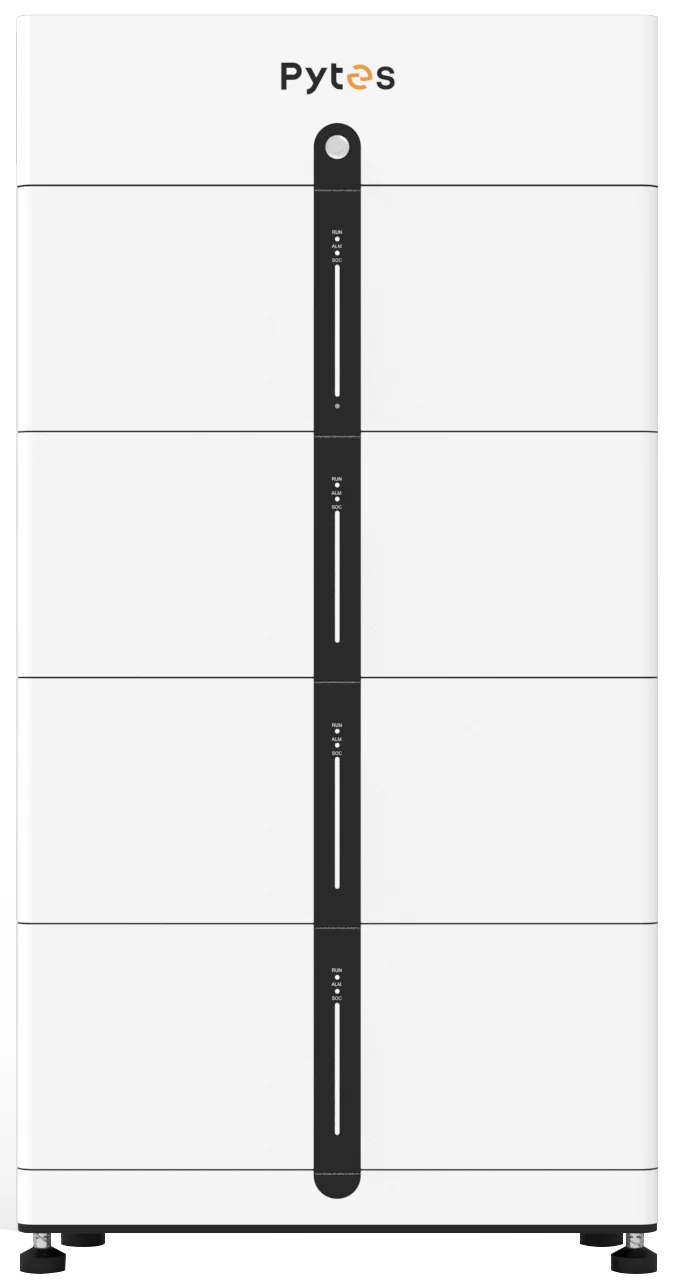
The owner of a private home needed a system that would automatically support critical loads during outages and allow the energy reserve to grow later. Quiet operation, a compact footprint, and no manual transfer between grid and backup were the main requirements.
Defining the critical load group
The backup group included lighting, refrigeration, networking, security, boiler controls, circulation pumps, and several workstation outlets. The electric hob, water heater, and high-power climate equipment remained outside the backup group because simultaneous operation would substantially increase inverter power and battery capacity requirements.
The calculation included startup current for pumps and the refrigerator compressor, not only average consumption. This confirmed that the inverter could handle short peaks without protective shutdown.
Why Pi LV1 was selected
The stackable Pi LV1 design placed the battery modules in a technical room without creating a long wall-mounted battery zone. Initial capacity matched the current critical loads, while the layout retained room for modules after future solar expansion.
Important project advantages included:
- modular energy capacity;
- a compact installation footprint;
- simplified connections between battery modules;
- coordinated data exchange with the inverter;
- system monitoring without access to the power section.
Operating logic
During normal operation, the inverter maintains battery charge and uses solar generation to supply the home. When the grid fails, the critical group continues automatically. Non-priority loads do not drain the battery, so the available reserve is used predictably.
After grid restoration, the system returns to its normal mode and recharges according to configured limits. Daily manual intervention is not required.
Outcome and future development
The system provides backup for equipment that supports basic comfort and remote work, without oversizing initial capacity. A future phase can add solar modules and battery capacity. Because installation space, switching, and inverter parameters were considered from the start, expansion will not require a complete redesign.