
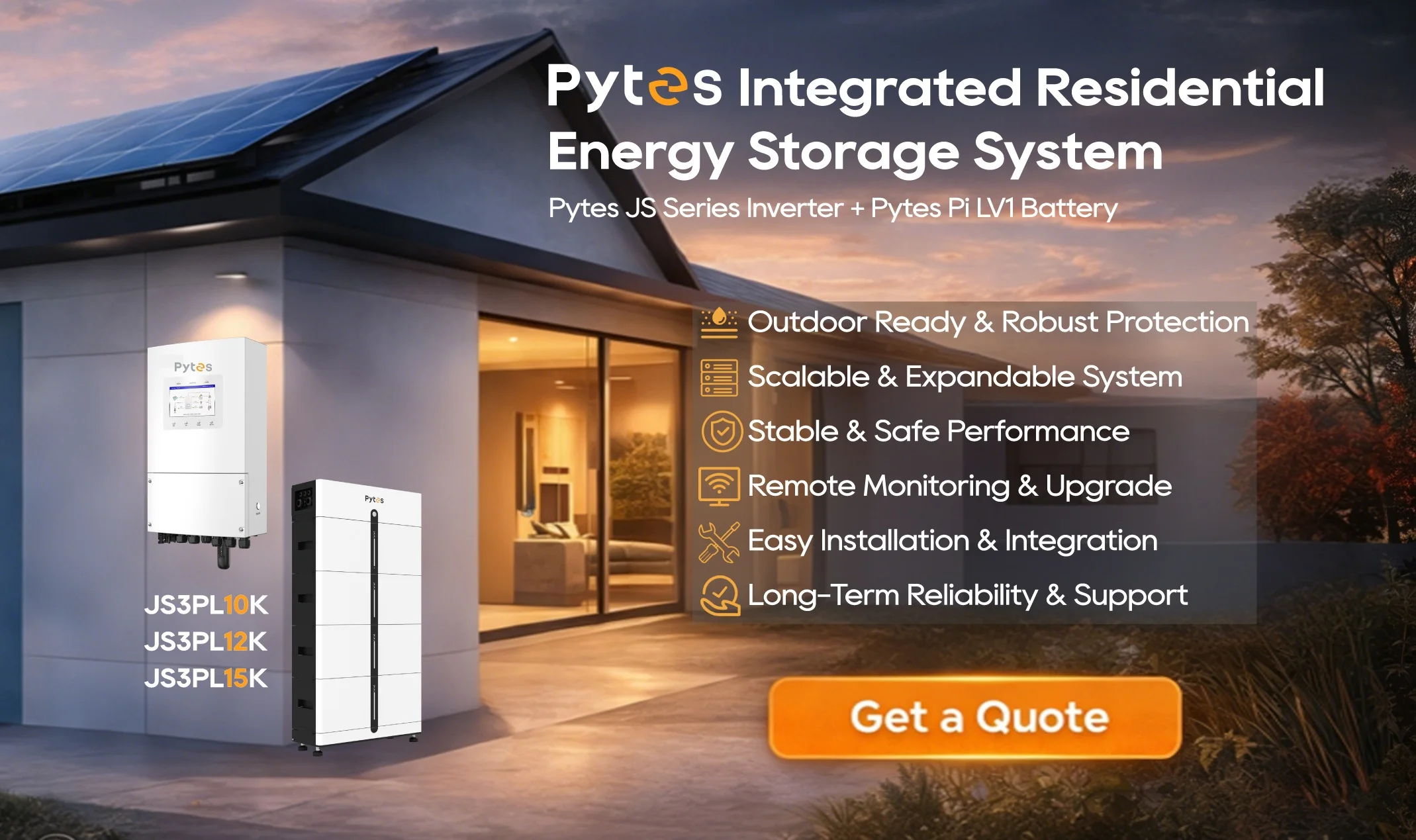
Residential energy storage in Europe is moving beyond single-product installations. Homeowners and installers increasingly want systems that are easier to commission, simpler to maintain, and designed as one coordinated energy platform.
This residential project in the Netherlands is important for that reason. It is the first real-world installation using a complete Pytes system solution: a Pytes three-phase hybrid inverter paired with a Pytes low-voltage battery system.
Project overview
The system was deployed in a typical Dutch residential setting, where three-phase electrical infrastructure and high expectations for system reliability are common. Instead of combining equipment from several brands, the project uses a unified Pytes configuration.
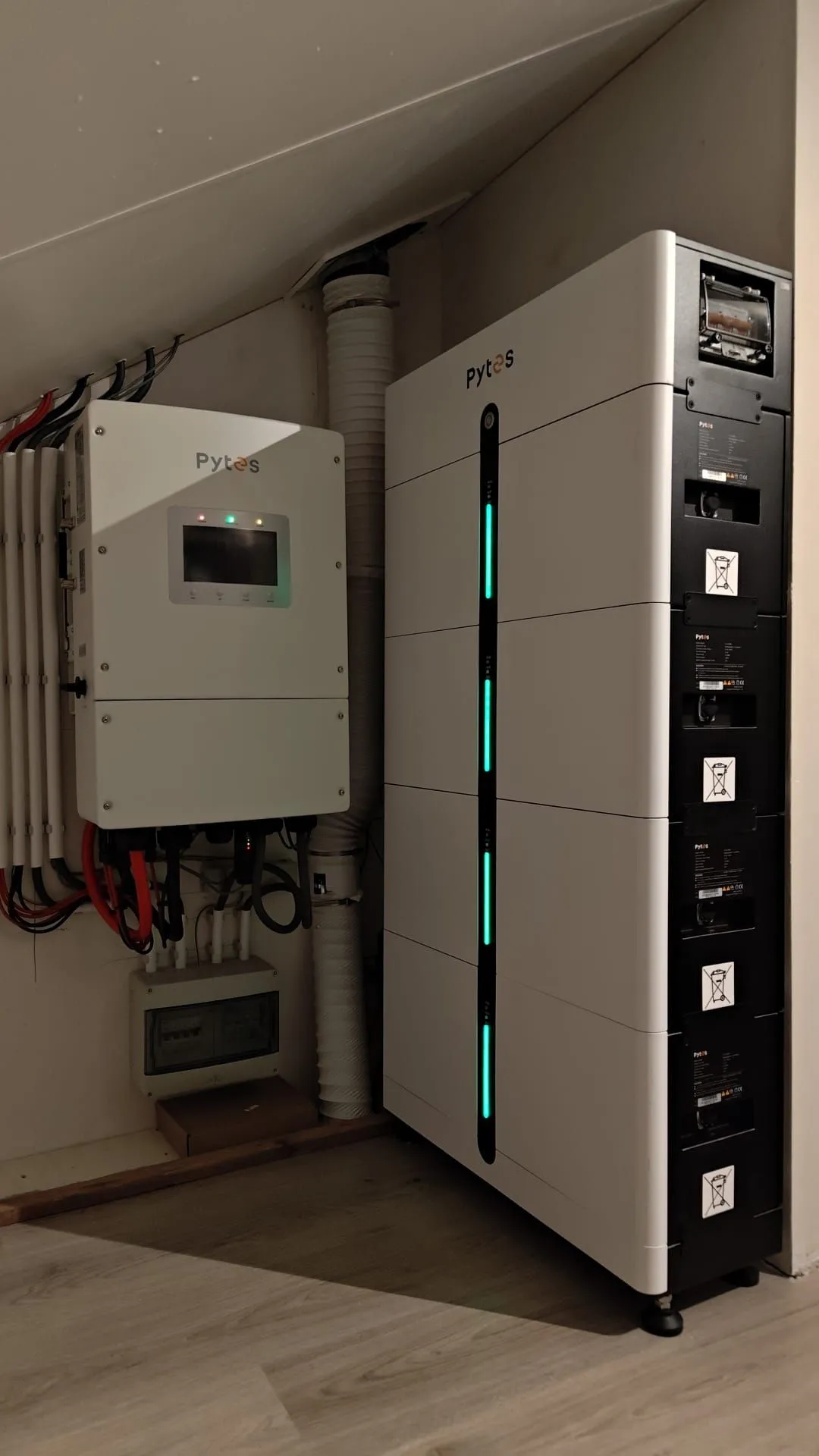
The core configuration includes:
- 1 x Pytes JS3PL10K three-phase hybrid inverter;
- 1 x Pytes Pi LV1-4 low-voltage stackable battery system;
- 20.48 kWh of total battery capacity.
This combination gives the household a balanced mix of power output and usable energy storage, while keeping the system architecture clear for the installer.
Why an integrated system matters
Many residential ESS projects depend on several third-party products that must be matched, configured, and supported separately. That can work, but it adds integration risk and makes long-term service more complex.
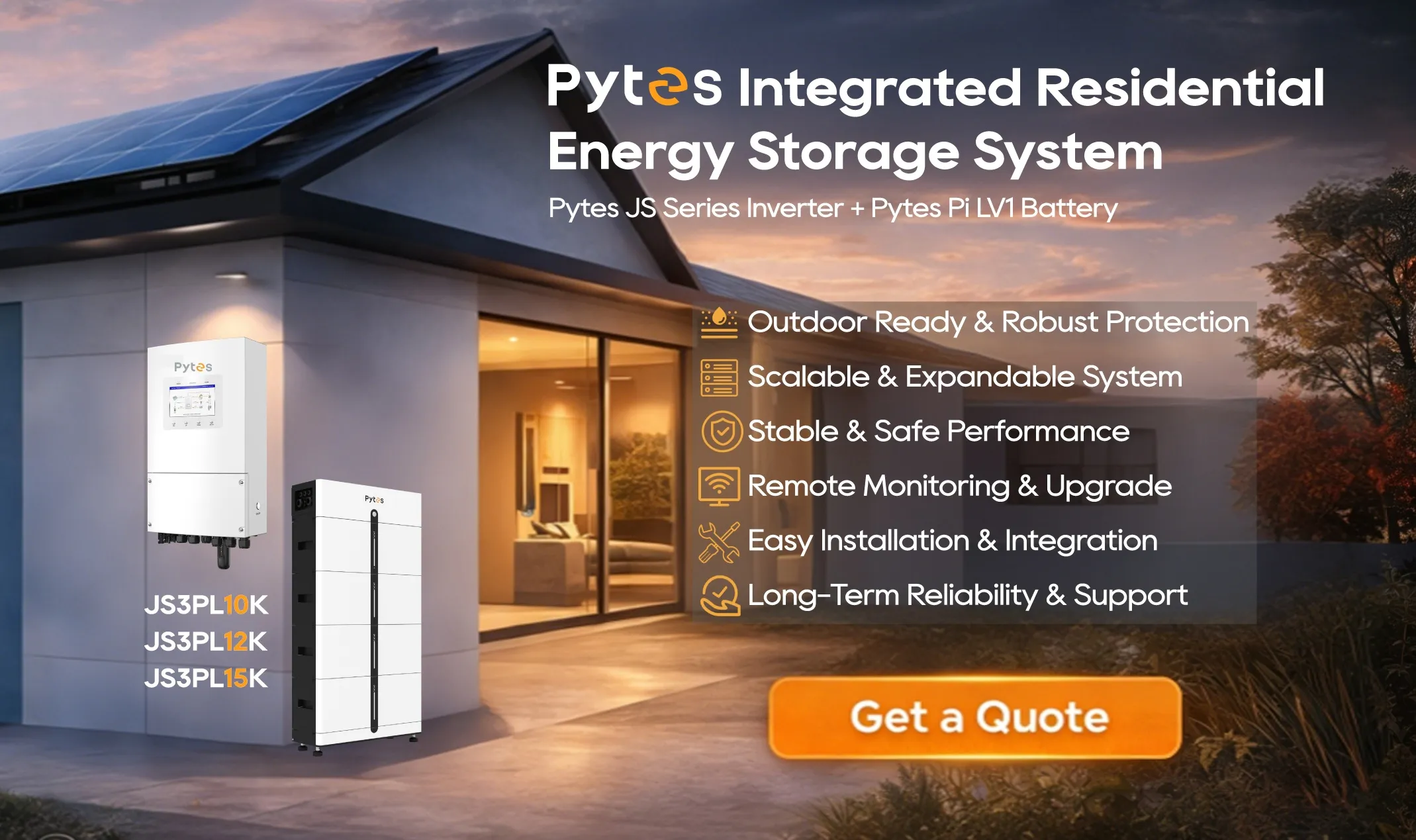
In this project, inverter and battery are part of the same product ecosystem. The JS3PL10K inverter provides three-phase hybrid operation, dual-output support, AC coupling, generator compatibility, high overload capability, and an IP66 enclosure for flexible installation.
The Pi LV1 battery system adds a modular, plug-and-play storage platform. Its stackable design allows capacity to grow with household demand, while remote monitoring and upgrade support help installers manage the system over time.
Real-world validation
From installation to commissioning, the project demonstrated the practical value of a single-brand residential system. Setup was more predictable, component compatibility was clearer, and operation could be evaluated as a complete energy solution rather than as separate devices.
For Pytes, the Netherlands installation provides a useful European reference for future residential projects. It confirms that the company can deliver not only batteries, but a coordinated home energy storage system that supports installers and homeowners throughout the system lifecycle.
As demand for residential storage continues to grow, integrated solutions like this will become increasingly important. They reduce system complexity and make it easier to scale reliable home energy storage across mature solar markets.